Inkarrí
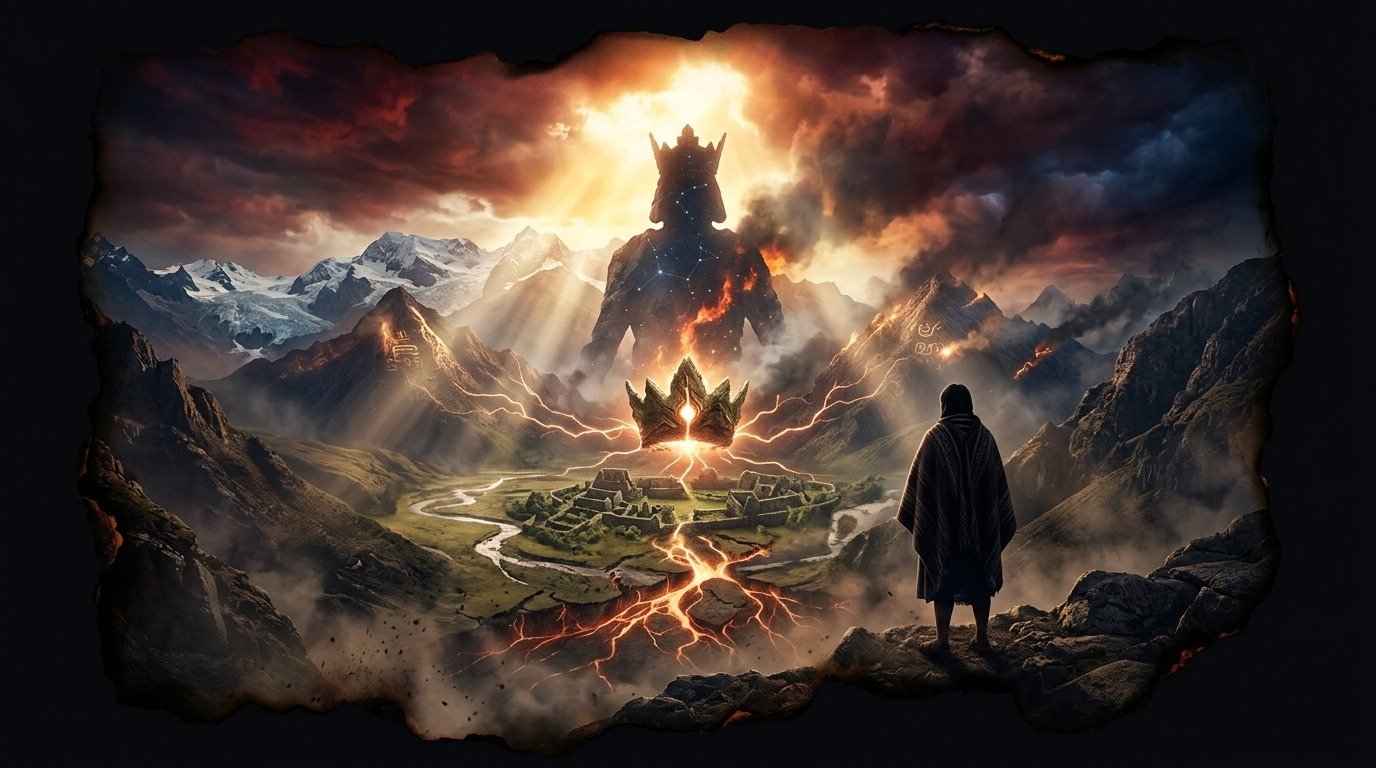
Inkarrí: The Decapitated King Rebuilding Himself Beneath the Andean Soil
In 1572, in the main square of Cusco, the Spanish conquistadors publicly decapitated Tupac Amaru I, the last sovereign of the Inca resistance of Vilcabamba. To prevent his tomb from becoming a place of pilgrimage and rebellion, the colonial authorities buried his head in a secret location, separated from his body. From this historical trauma, the myth of Inkarrí (Inca-King) was born: the belief that the monarch's head remains alive beneath the earth and that his body is slowly regenerating, gathering strength for the day when it is completely reconstructed, emerges to the surface, and unleashes the *Pachakuti*, the great overturning of the world. The Andean prophecy foretells that the return of Inkarrí will restore the sacred order of Tawantinsuyu, the empire of the four regions, destroying the colonial order and imposing the justice of the ancient gods of the earth and the sun. His arrival is not seen merely as a political change, but as a cosmological cataclysm that will restore the harmony between humanity and the forces of nature, broken since the day of the Spanish invasion.
The Slow Reconstruction Beneath the Andes
Andean oral tradition, jealously preserved in remote Quechua communities, relates that Inkarrí's body is growing from the depths of the soil toward Cusco. The decapitated king's veins crawl through the cracks in the rock, connecting the sacred mountains (the Apus) and absorbing the energy of the Pachamama to reshape his flesh and bones once more. When the head is finally reunited with the torso and limbs, the world will tremble. The advent of Inkarrí will bring judgment for the usurpers and the restitution of lands to their rightful owners. The stones will speak again, the rivers will run in the correct direction, and the sun will shine with the strength of ancient times, marking the end of the era of servitude and suffering for the indigenous peoples.
The Origin in the Fall of the Empire
The myth of Inkarrí arose from the fusion of two tragic historical figures: Atahualpa, the Inca executed by Francisco Pizarro in Cajamarca in 1533, and Tupac Amaru I, decapitated nearly forty years later in Cusco. The brutality of the conquest shattered the Andean worldview, which could not conceive of a universe without the presence of the Inca, the mediator between heaven and earth. The physical disappearance of the sovereign left the world in a state of absolute disorder (the *Hucha*). To heal this cosmic void, Andean sages and priests projected the figure of the Inca into the interior of the earth, the *Uku Pacha* (the underworld). If the king could no longer reign above ground, he would reign beneath it until conditions were ready for the change of era. Military resistance thus became a mystical and indestructible waiting.
The Rebellion of the Huacas and the Unearthed Myth
Throughout the centuries of colonial domination, the prophecy of Inkarrí fueled conspiracies and armed uprisings. Messianic movements such as the *Taki Onqoy* in the 16th century, which called for the rebellion of local Andean deities against the Christian god, and the great insurrection of Tupac Amaru II in 1780, were imbued with the spirit of the return of the Inca King. The rebels did not fight merely for political reforms, but for the arrival of the mystical cataclysm that the prophecy promised. In the 1950s, Peruvian anthropologists led by José María Arguedas systematically recorded the myth of Inkarrí for the first time in the community of Puquio, Ayacucho. They discovered that, far from being a forgotten legend, the belief remained alive in the hearts of the peasants, who spoke of the underground king with absolute certainty. Inkarrí remains the symbol of a silent and profound resistance, the heartbeat of an ancient world waiting beneath the mountains for the exact moment to rise again.
Comments
Share information, an experience, or a source to help enrich this entry. They are automatically reviewed before being published.
Loading comments...