Weeping Images
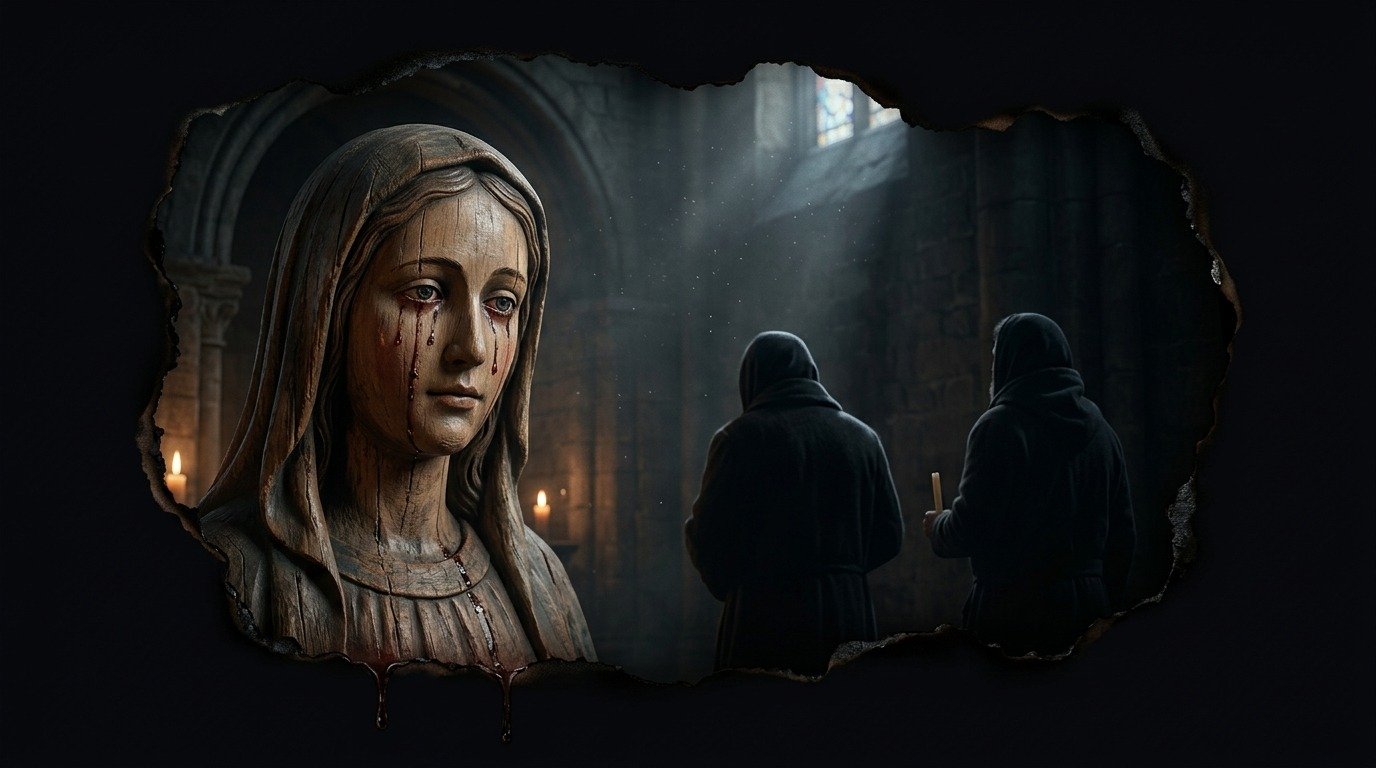
Weeping Images: Tears and Blood of Sacred Origin
What It Is
The lacrimation of images is the phenomenon in which a sculpture, statue, bust, or painting of a religious nature, usually representing the Virgin Mary, Jesus Christ, or saints, inexplicably emanates liquid tears, tears of blood, perfumed oils, or water from its eyes, wounds, or hands.
How It Manifests
The phenomenon begins unexpectedly before individual witnesses or large crowds. The liquid wells up directly from the eyeballs of the image or from the wounds depicted on the object, such as the wounds of the crucifixion or the heart pierced by thorns.
The tears flow down the face of the image in a manner identical to the human lacrimal response. Chemical analysis of the emanated fluids often reveals them to be real human tears, type AB positive blood, or vegetable oils with highly pure floral scents. The material of the image (wood, plaster, terracotta, or bronze) shows no unusual porosity or alterations that would explain the origin of the liquid from within. The phenomenon can last for hours, recur intermittently for months, or happen only once.
History and Traditions
Records of weeping or bleeding images date back to Roman antiquity, where statues in pagan temples manifested sweat or blood before major military catastrophes. In medieval and modern Christianity, the phenomenon acquired a sense of spiritual warning, divine mourning for the sins of humanity, or a message of consolation in times of crisis.
For ecclesiastical authorities, each case requires a rigorous scientific investigation carried out by independent laboratories, chemists, and physicians, in order to rule out fraud by capillary action, environmental condensation, or malicious tampering with the object by individuals interested in generating devotion.
Famous Cases
- **Our Lady of Tears of Syracuse (Italy, 1953):** A glazed plaster plaque bearing the image of the Immaculate Heart of Mary wept human tears intermittently for four days in the humble home of a married couple. The liquid was analyzed by a team of independent doctors who determined that it had the same chemical composition and salinity as human tears. The miracle was officially approved by the Catholic Church. - **Our Lady of Akita (Japan, 1973-1981):** A wooden statue of the Virgin Mary sculpted by a Buddhist artist wept water and blood on 101 occasions. The phenomenon was witnessed by the local bishop and analyzed by forensic medicine laboratories at the University of Niigata, confirming that the samples corresponded to human biological fluids of types O, B, and AB.
What Explains It
The theological explanation defines the weeping of images as a real physical manifestation of the spiritual pain of celestial beings over the moral state of the world. It is a miracle of physical apport, where God uses the inanimate matter of the object of devotion to transmit a message of repentance and conversion to the faithful.
Empirical science demonstrates that the vast majority of these cases are mechanical frauds. They are carried out by drilling invisible channels inside the image to store liquids that flow via capillary action due to the heat of nearby candles, or by applying layers of waterproofing glaze that retain ambient moisture in specific areas and simulate tears when the room warms up. In plaster images, the porosity of the material allows it to absorb liquids that are then slowly expelled through tiny cracks in the paint of the eyes.
Connections
This phenomenon is linked to Marian apparitions, the phenomenon of physical apports, bodily stigmata, and collective psychokinesis.
Comments
Share information, an experience, or a source to help enrich this entry. They are automatically reviewed before being published.
Loading comments...