Spontaneous human combustion
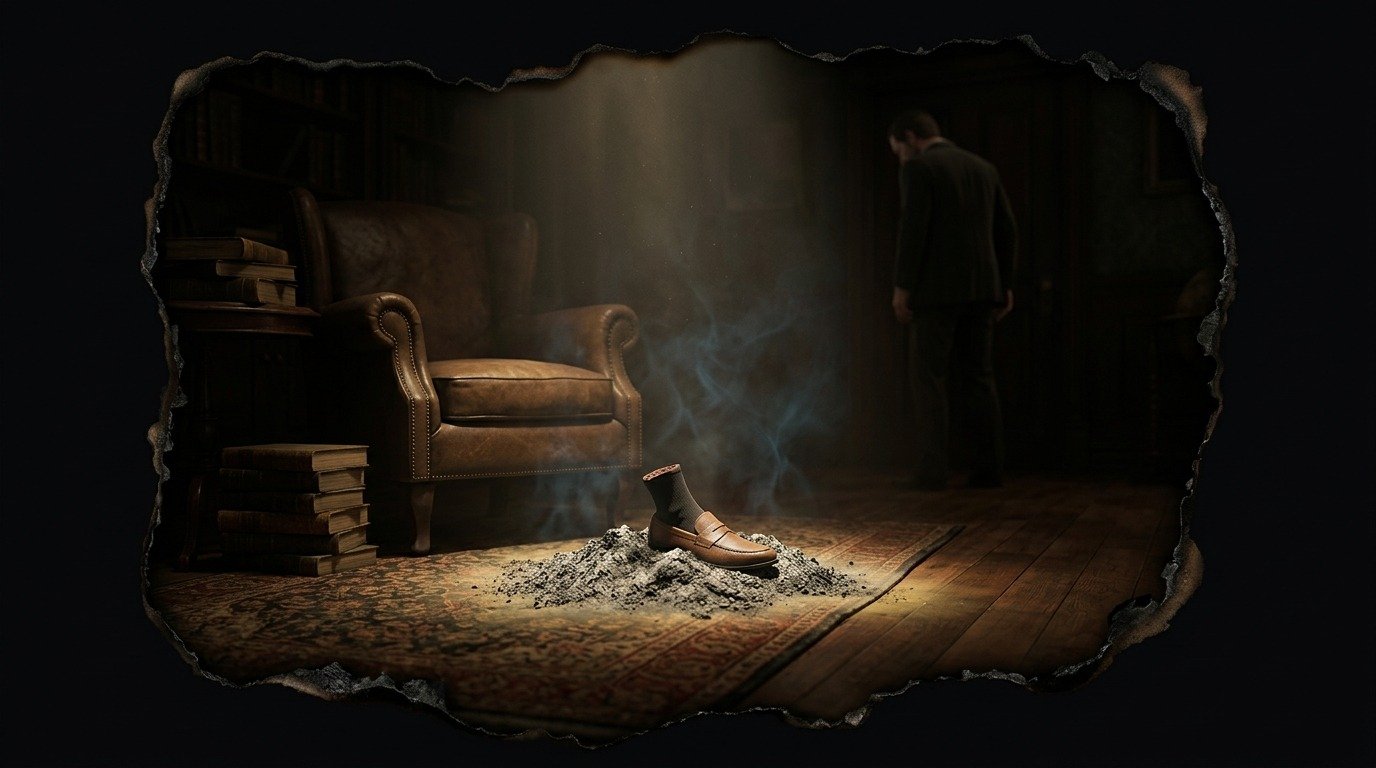
Spontaneous Human Combustion: The Fire That Is Born Within
What Is Spontaneous Human Combustion
Spontaneous human combustion is the ignition and reduction to ashes of a living human body without the intervention of an external heat source. The fire originates inside the organism itself. This phenomenon is characterized by its extreme speed, its incredibly high temperature, and a constant physical peculiarity: the fire consumes the bone and muscle tissue of the body but almost completely spares the immediate surroundings of the deceased.
How the Phenomenon Manifests
The combustion process follows an identical physical pattern in all documented records. First, the ignition occurs suddenly and silently. The victim does not utter screams of pain or make defensive movements, demonstrating that loss of consciousness or death occurs instantaneously. Second, the fire reaches temperatures exceeding 1500 degrees Celsius (2732 degrees Fahrenheit), which are necessary to calcine human bones. Despite this intensity, the fire does not spread. The destruction is strictly concentrated on the body. Third, the combustion is selective. The torso and head are reduced to a pile of fine, greasy, grayish ashes. However, the extremities, particularly the feet and hands, usually remain intact, cleanly severed from the rest of the charred body. Fourth, the direct surroundings suffer barely any damage. The victim's clothing usually burns, but the sheets, armchairs, or wooden floor where the body is found show barely any superficial burns. A constant residue remains in the room: a greasy, yellow, foul-smelling soot that adheres to the walls and ceiling.
History and Records of the Internal Fire
The historical record of the phenomenon began in the 17th century. The French physician Paul Rolli presented the first academic report on human combustion to the Royal Society of London in 1744. In 1763, the writer Jonas Dupont published *De Incendiis Corporis Humani Spontaneis*, the first systematic compilation of documented cases. During the 19th century, the medicine of the era erroneously linked the phenomenon to chronic alcoholism. Hygienist physicians claimed that alcohol abuse saturated body tissues with flammable gases, turning the body into a highly combustible material. This belief took root in popular culture and was used by the novelist Charles Dickens in his work *Bleak House* (1853), where the character of Krook dies consumed by his own internal fire. With the advancement of chemistry, this theory was discarded, as human tissue soaked in alcohol does not burn in that manner.
Three Irrefutable Historical Cases
Forensic history records detailed cases where the intervention of an external fire was completely ruled out: * **Countess Cornelia di Bandi (Cesena, Italy, 1731):** The 62-year-old aristocrat retired to her room for the night. The next morning, her maid found her reduced to a pile of ashes 1 meter (3.3 feet) from her bed. Her legs, dressed in stockings, and part of her head remained intact. The sheets had a layer of soot but had not burned. * **Mary Reeser (St. Petersburg, Florida, 1951):** Reeser, 67, was found in her apartment reduced to ashes inside her armchair. Only her skull (shrunk by the extreme heat) and her left foot, which still wore a slipper, survived. The metal springs of the armchair had melted, but a pile of newspapers located just a few centimeters (inches) from the body suffered no damage at all. * **Jeannie Saffin (London, England, 1982):** Saffin, 61 years old and mentally disabled, burned in the presence of her father in the kitchen of her home. The man stated that he saw flames coming out of his daughter's mouth and hands. There were no lit fire sources in the room. Saffin passed away in the hospital days later due to internal burns.
The Esoteric Explanation and Scientific Analysis
For occultism and esoteric medicine, the origin of the phenomenon is found in the etheric body and vital energy. The Hermetic tradition teaches that the human body generates a constant electrical and thermal current called internal fire or *Kundalini*. When an energetic short circuit occurs due to a collapse of the nervous system or an extreme emotional overload, vital energy is suddenly released into the physical plane. This release breaks the molecular balance and accelerates the body's atoms, triggering a biological nuclear reaction that consumes matter from its elemental particles. Forensic science rejects the spontaneous nature of the fire and proposes the "wick effect" (or candle effect) as a physical explanation. According to this theory, a minimal external source, such as a lit cigarette or an ember from a fireplace, punctures the victim's clothing and skin. As the subcutaneous fat melts, it is absorbed by the clothing, which acts like the wick of a candle. The body burns slowly and steadily for hours at moderate temperatures that are nevertheless sufficient to destroy bone, without generating high flames that would spread the fire to nearby furniture.
Connections with Other Phenomena
Spontaneous human combustion is directly linked to pyrokinesis, the ability to ignite fire with the mind. It is also related to poltergeist phenomena, where an individual's burst of psychic energy often manifests through spontaneous fires on the walls or furniture of a house. In the spiritualist realm, it is associated with extreme manifestations of ectoplasm, where the medium experiences drastic thermal variations that can destabilize their physical structure.
Comments
Share information, an experience, or a source to help enrich this entry. They are automatically reviewed before being published.
Loading comments...