Incorrupt bodies
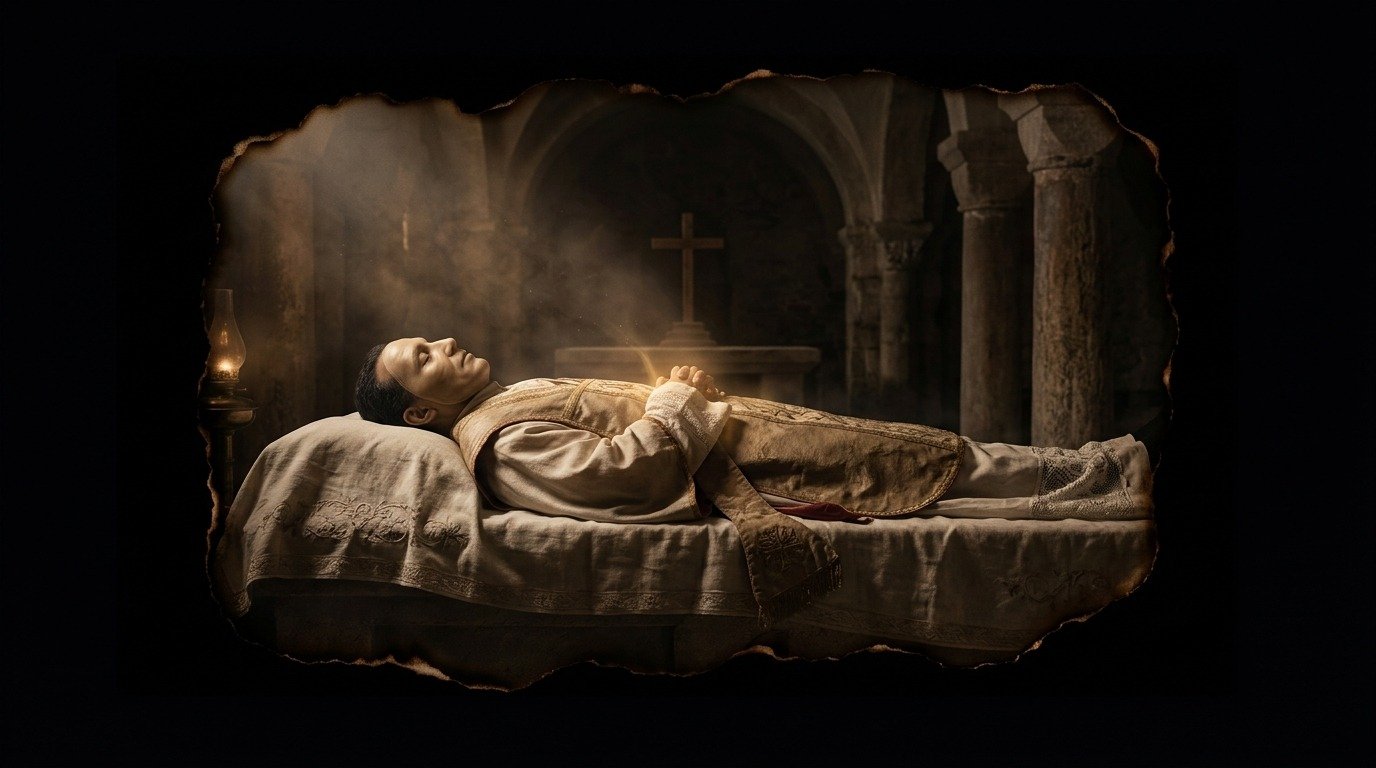
Incorrupt bodies: the flesh that defies death
What it is
Cadaveric incorruptibility is the phenomenon by which a human body does not undergo the natural process of decomposition, putrefaction, or skeletonization after physical death. This preservation occurs without the intervention of artificial embalming techniques, deliberate mummification, or extreme environmental conditions of cold or dryness.
How it manifests
An incorrupt body retains flexibility in the joints and a natural coloration in the skin for months, years, or centuries after death. The internal organs remain intact and soft. The corpse does not emit an odor of putrefaction; on the contrary, it usually exudes a sweet aroma, known as the "odor of sanctity," or distills a scented oil with healing properties. Occasionally, when incisions are made in these bodies, liquid red blood flows, even though blood circulation stopped long ago. The body remains immune to the attack of insects, fungi, and bacteria that normally destroy organic matter immediately.
History and traditions
Incorruptibility is revered primarily in the Roman Catholic tradition and the Eastern Orthodox Church. It is interpreted as a divine sign of the deceased's purity of life and an anticipation of the resurrection of the flesh. During the canonization process of a saint, the exhumation of the body is a standard step. If the corpse is found incorrupt in a damp environment or one prone to decomposition, it is considered a miracle of preservation of divine origin. In Zen and Tibetan Buddhism, similar phenomena of self-mummification exist, achieved through severe ascetic diets before death and deep meditation at the moment of physical death.
Famous cases
- **Saint Bernadette of Lourdes (France, died in 1879):** Her body was exhumed on three occasions (1909, 1919, and 1925), always found in a perfect state of preservation, flexible and with elastic skin, despite her zinc coffin being corroded by moisture. It is currently displayed in a crystal reliquary in Nevers. - **Saint John Vianney, the Curé of Ars (France, died in 1859):** Exhumed in 1904, his body was found intact and free of decomposition, even preserving his brain in perfect physical condition. His face is covered by a thin wax mask to protect the skin dehydrated by exposure to the air. - **Saint Teresa of Avila (Spain, died in 1582):** Her body was buried in damp earth and covered with lime to accelerate its decomposition. When exhumed nine months later, the body was intact, flexible, and exuded an aromatic oil that permeated the tomb and the clothes.
What explains it
The theological and mystical explanation attributes incorruptibility to the transmutation of physical matter through the action of divine grace. The spiritual purity of the individual permeates the atomic structure of their body, protecting it from the corruption of matter. The forensic science and medicine explain the phenomenon through specific chemical and environmental processes. The most common is adipocere or "grave wax," a process by which body fats are transformed into a soapy, waxy substance that halts putrefaction in highly humid and oxygen-deprived environments. Natural saponification, rapid tissue dehydration (spontaneous mummification), or the presence of preservative minerals in the soil where the coffin is placed also play a role.
Connections
This phenomenon is related to the cult of relics, healing miracles, sanctity, and the alchemical transmutation of the physical body. ---
Comments
Share information, an experience, or a source to help enrich this entry. They are automatically reviewed before being published.
Loading comments...