Bune
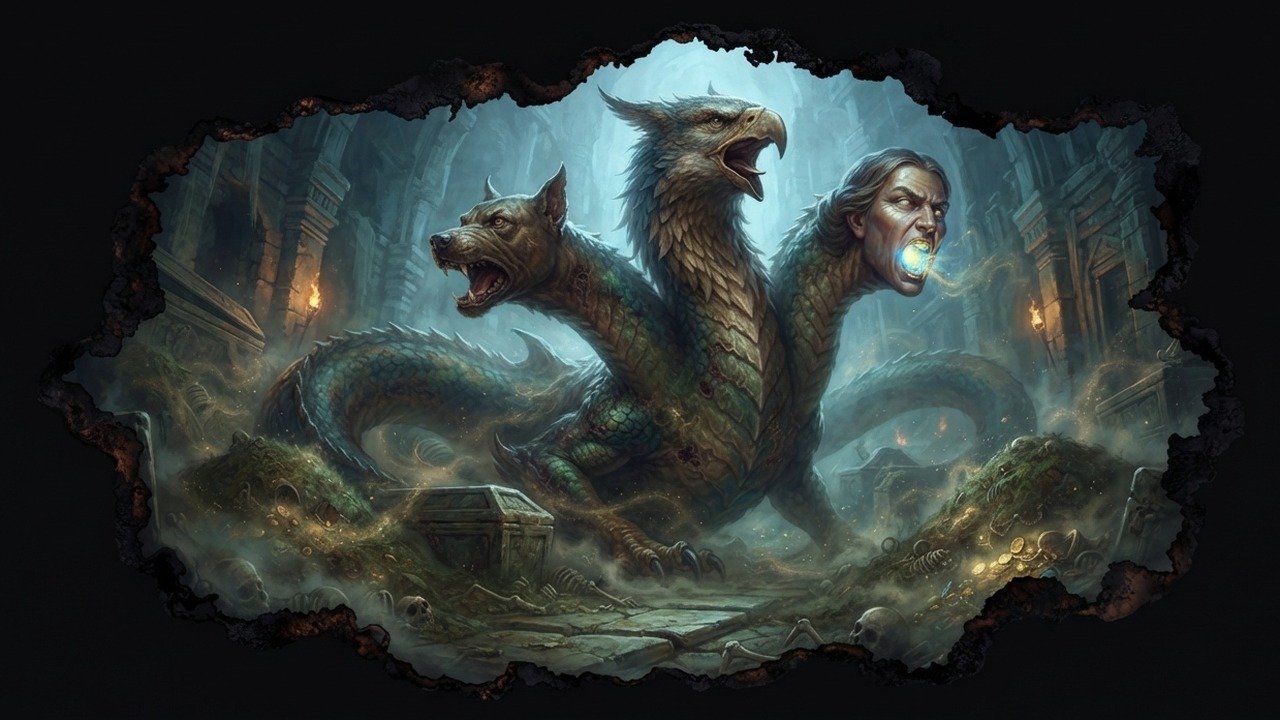
BUNE:
The Legacy of Bune: The Duchess of the Sepulcher and the Silent Abundance
Origin and Legend: The Guardian of the Earthly Womb and the Necropolis
The lineage of Bune (also known as Bim) traces its foundations to the oldest practices of ancestral veneration and necromancy in Ancient Egypt and the Mediterranean Levant. In her original conception, prior to Judeo-Christian demonization, Bune embodied the fertilizing and secret power of the deep earth: the soil that welcomes the bodies of the dead and, at the same time, nourishes the roots of the crops. She possesses a deep affinity with the archaic funerary deities who guarded the treasures buried alongside kings and the transition of souls into the underworld. She did not emerge as a spirit of ruin, but as the guardian of the memory of the ancestors and of mineral and subterranean wealth. Her primordial link with death was not a cause for dread, but for solemnity; the sepulcher was seen as the dark womb from which true material prosperity emanates.
Historical Evolution: From the Three-Headed Dragon to the Patroness of Necropolises
The magical literature of the sixteenth and seventeenth centuries cataloged Bune as one of the highest authorities of the lower plane, holding the rank of Great Duchess (or Duke) in command of thirty legions. The compilers of the Goetia described her visual manifestation with a disturbing and dense symbolism: a dragon equipped with three heads—the first of a dog, the second of a griffin, and the third of a man (or woman)—who speaks with an abyssal, deep, and strangely melodious voice. During the Renaissance, while the official Church condemned her as a spirit of greed and dark pacts, closed circles of alchemists and necromancers made her a central figure of appeal. Bune became the entity par excellence for moving the dead from their places, summoning the shadows of the necropolises, and transmuting penury into opulence through the wisdom of the deceased.
Esoteric Meaning: The Necromantic Alchemy of Transmutation
On the map of the Tree of Death (Qliphoth), Bune is situated on the paths that connect the spheres of dense matter (Malkuth/Lilith) with the realm of illusions and ancestors (Yesod/Gamaliel). She is the archetype of the alchemical transmutation that extracts life from decomposition: the absolute Nigredo that fertilizes the earth. Bune teaches the esoteric truth that material wealth is not separate from the spiritual world; opulence is simply densified ancestral and telluric energy. As a mistress of eloquence and necromancy, she represents mastery over language that transcends the barrier of death, allowing the initiate to speak with the accumulated wisdom of extinct generations and manifest financial stability through the understanding of the laws of matter.
Practice and Manifestation: The Art of Abundance and Sepulchral Silence
Bune's vibration is heavy, majestic, and of a sepulchral serenity. She does not act through agitation, but through the gravitation of resources.
Manifestation in the Individual: When her energy touches the operator's psyche, it induces a state of unshakable calm, a measured eloquence, and a pragmatic sharpness for resolving debts and acquiring assets. In the ritual room or the environment, her presence is announced by a deep smell of damp earth, myrrh, ancient incense, or the tactile sensation of a dense, subterranean breeze.
Approach and Protection: Dealing with Bune demands absolute ceremonial respect and an impeccable devotion to the rest of the dead. Anyone who approaches her with frivolity or childish desperation encounters the suffocating weight of the tomb. To work with her from a position of sovereignty, the magician must act as a king among the shadows, offering a fair exchange (traditionally honoring the memory of the deceased or through offerings of pure resins and copper) without kneeling. Effective protection against any deviation of this energy is one's own righteousness and personal balance: understanding that the wealth granted by the Duchess is an instrument of earthly power that must be governed with discipline, never a chain of dependency.
Comments
Share information, an experience, or a source to help enrich this entry. They are automatically reviewed before being published.
Loading comments...