Vayu
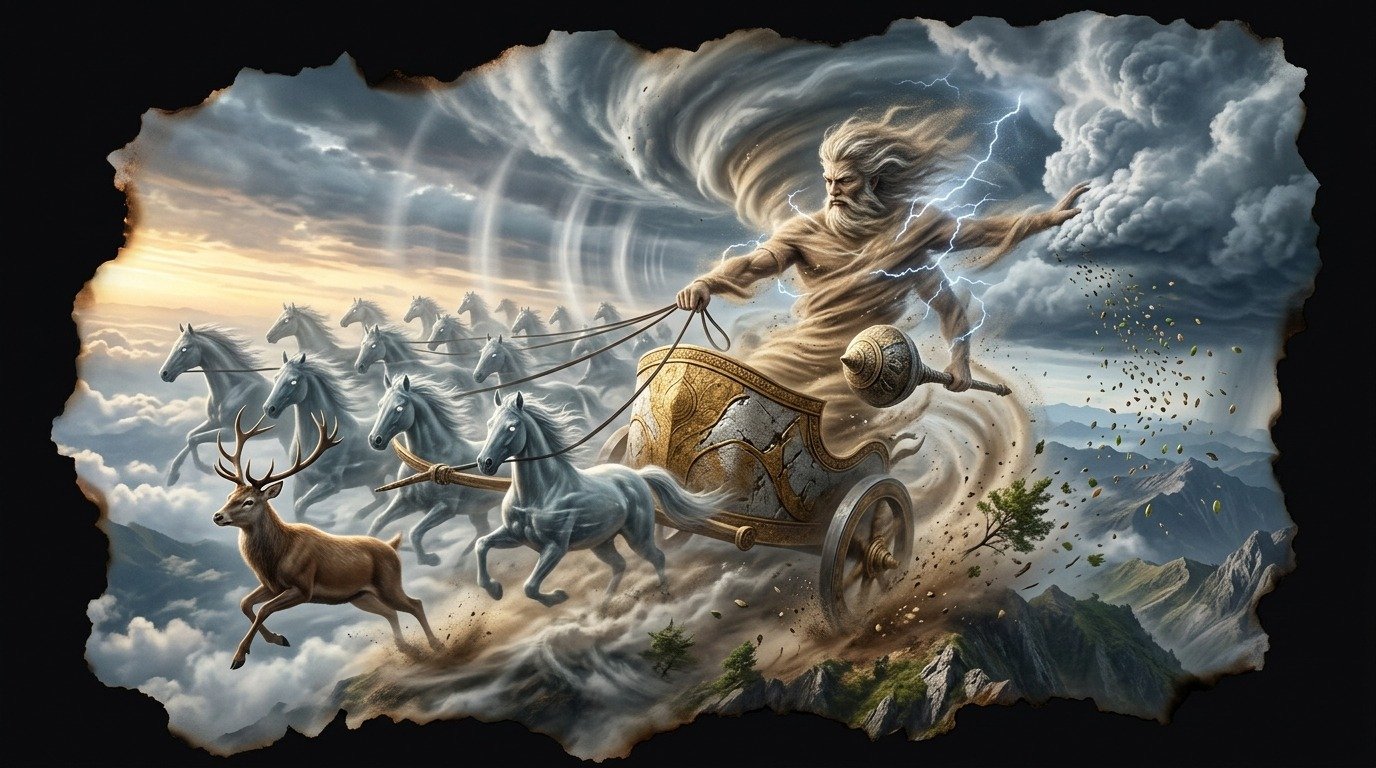
Vayu: The Invisible Breath of Existence
The Wind That Sustains the Soul
Vayu is not simply the movement of air; he is *Prana*, the vital breath that sustains the existence of gods, men, and beasts. Invisible to the human eye yet omnipresent, Vayu is the deity who fills empty spaces and gives strength to the lungs. It is said that when the senses of the human body disputed among themselves to see which was the most important, they decided to leave the body one by one. When hearing left, man became deaf but lived; when sight departed, he became blind but kept breathing. But when Vayu began to rise to leave the body, all the other senses felt they were being torn out by their roots, understanding that without the wind of life, the entire machinery of the body is nothing but inert dust.
The Swift Messenger and the Golden Chariot
In the divine pantheon, Vayu is the epitome of speed and unbound brute force. He travels in a brilliant chariot of gold and silver that crosses the heavens with a deafening roar, pulled by thousands of swift horses or by a fleet-footed deer, the animal consecrated to him for its agility and elusive nature. As sovereign of the mid-atmosphere, the realm between the starry sky and the firm earth, Vayu is the herald who clears the paths for rain, pushes the clouds, and scatters the seeds of vegetation to the most remote corners. He is a god of volatile temperament: he can be the cool breeze that soothes the midday heat or the furious hurricane that tears forests up by the roots and whips the oceans into destructive tempests.
The Father of Colossi
Vayu's strength is not limited to his atmospheric manifestation; it is inherited in the blood of heroes. He is the spiritual father of two of the most formidable figures in sacred epic: Hanuman, the monkey god whose loyalty and prodigious leaps defied gravity, and Bhima, the warrior of incomparable physical strength capable of tearing down entire armies with his mace. To both descendants, Vayu granted the gift of unattainable speed, the endurance of the wind that never tires, and the ability to expand or contract their strength at will. Through them, the power of the wind god intervenes directly in the destiny of earthly kingdoms, showing that his breath can topple empires with the same ease with which it sweeps away a dry leaf.
The Clash Against the Mountain
His indomitable power is illustrated in his legendary clash against Mount Meru, the abode of the gods. Jealous of the great mountain's immutability, Vayu blew for an entire year with all his fury to wear down its summit. Although at first the mountain was protected by the wings of Garuda, the divine bird, one day when he was away, Vayu unleashed a gale of such magnitude that it broke the peak of Meru and cast it into the ocean, thus creating the island of Lanka. This act of wild rebellion defines Vayu: an elemental force that recognizes no limits, a free god who flows where he pleases, reminding mortals that life is, in its essence, a breath that cannot be held.
Comments
Share information, an experience, or a source to help enrich this entry. They are automatically reviewed before being published.
Loading comments...