Hachiman
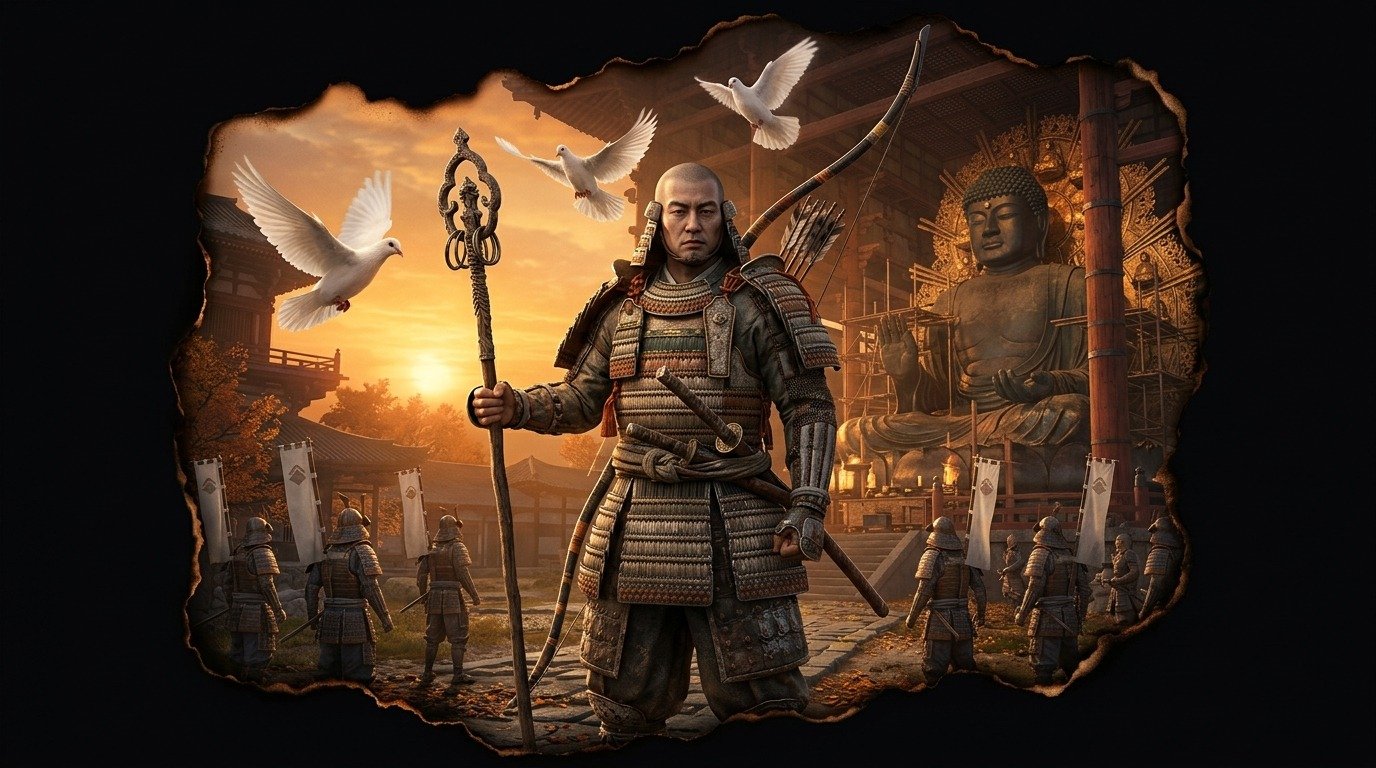
Hachiman: The Banner of Steel and Compassion
The Birth of the National Spirit
Hachiman did not begin his existence in the celestial realms, but in the womb of a human queen and in the heat of earthly battlefields. His origin dates back to the figure of Emperor Ōjin, a ruler whose wisdom and military prowess brought an era of peace, agricultural development, and cultural flourishing. After his death, the gratitude and devotion of his people elevated his spirit to the status of divinity, transforming him into the great protector of the dynasty and the soul of the land.
Unlike the gods born from primordial natural elements, Hachiman is a deity who understands the weakness and greatness of the human heart. He is depicted as a warrior in classic and imposing armor, but also in the guise of a Buddhist monk with a shaved head, holding a pilgrim's staff. This duality defines his essence: he is the strength of arms put at the service of peace, justice, and the preservation of order.
The Three Doves and the Warriors' Bow
The presence of Hachiman is announced by the flight of white doves, his sacred messengers. Unlike the birds of prey usually associated with war gods, Hachiman's dove represents the ultimate aspiration of any just conflict: the restoration of peace and social harmony. However, when war is inevitable, these birds guide the banners of armies fighting for a legitimate cause.
The weapon of choice for Hachiman is the great war bow, and it is said that his invisible hand guides the arrows of those warriors who fight with honor and self-discipline. He was the tutelary deity of the Minamoto clan, the samurai family that unified the country under the first shogunate. Before marching into battle, the warriors of this clan would prostrate themselves before Hachiman's shrines, swearing to uphold the ethical code that demanded mercy for the defeated and protection for the defenseless. Strength without compassion was considered a direct offense to the god.
The Protector of Metals and Peace
Hachiman's power also extends to the transformation of matter and the construction of monuments to faith. When the emperor ordered the casting of the Great Bronze Buddha of Nara, the colossal statue meant to spiritually unify the country, the artisans faced insurmountable technical difficulties and a critical shortage of gold to coat the figure.
Hachiman intervened through an oracle, promising that the mines of the mountainous regions would reveal their veins of gold for the great work. Shortly after, rich deposits were discovered, allowing the statue to be completed. In gratitude, Hachiman himself was named protector of the great effigy, demonstrating that his sword serves not only to destroy the enemies of order, but also to pave the way for spiritual enlightenment and the flourishing of the arts. Today, his shrines, crowned by white banners, remain places where mortals seek the inner strength needed to overcome their own daily battles.
Comments
Share information, an experience, or a source to help enrich this entry. They are automatically reviewed before being published.
Loading comments...