The Mohán Poira
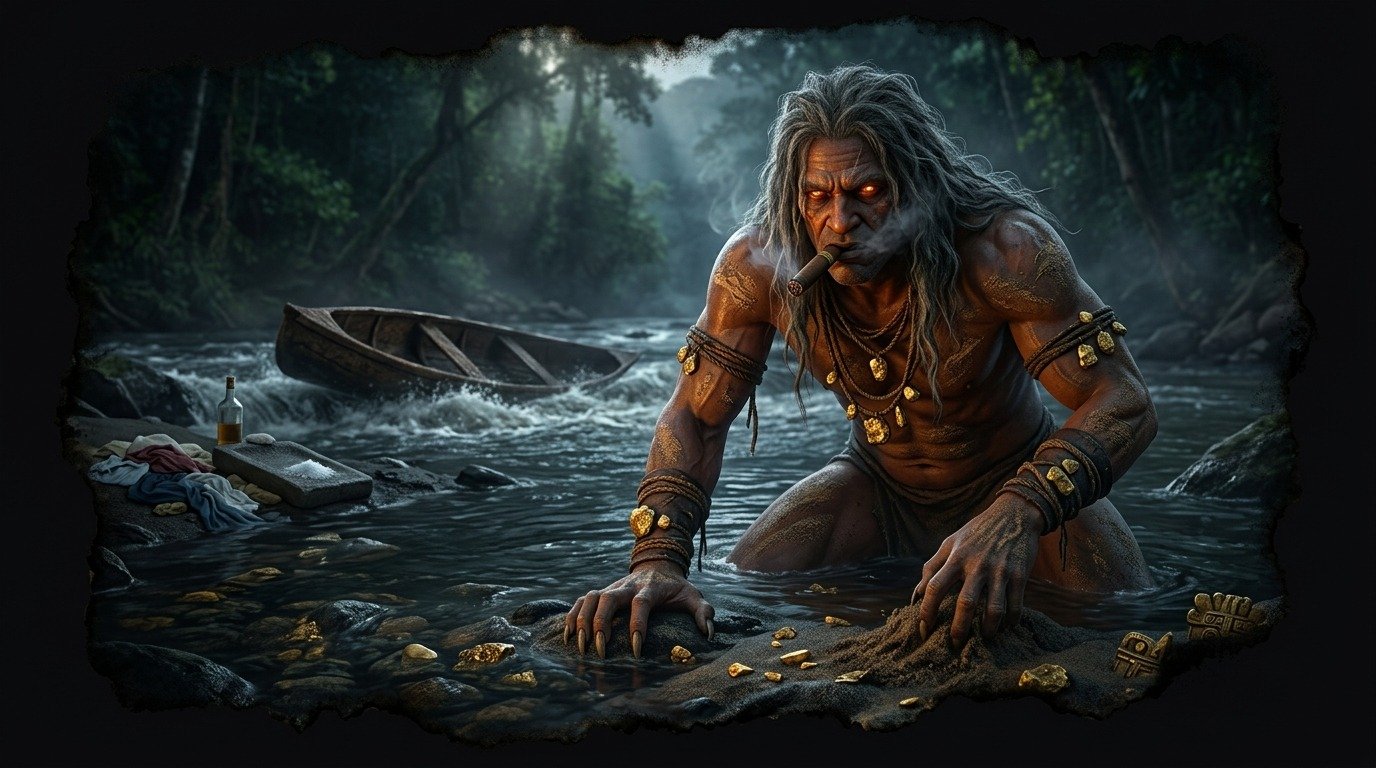
El Mohán / Poira: The Lord of the Currents and the Golden Sands
The Demonized Shaman and the Fluvial Core
El Mohán—also known in various regions of the Colombian Andes and valleys as the Poira—is one of the oldest and most deeply rooted river and land deities in the oral tradition of Colombia, with an especially strong presence in the Magdalena River basin and the departments of Tolima and Huila. His historical origin is shamanic and pre-Hispanic. Originally, the *moxanes* or *mohanes* were the priests, sages, and healers of the Carib and Chibcha cultures, medicine men capable of altering their consciousness and communicating with the spirits of nature. With the arrival of the conquistadors and the subsequent forced catechization, these figures of spiritual authority were systematically demonized by the Catholic Church, relegating them in the popular imagination to lecherous monsters, outlawed sorcerers, and wild inhabitants of the waters.
Morphology and River Sovereignty
El Mohán manifests as a man of Herculean build, with skin tanned by the sun and water to a coppery or golden tone, and long, tangled, graying hair covering his back. His eyes are described as glowing embers, capable of seeing in the deep darkness of the rivers, and his nails are long, strong, and sharp as claws, which he uses to dig through the sand in search of gold. He dwells in underground caverns hidden beneath the currents of great rivers, where he guards fabulous pre-Hispanic treasures and precious stones. He is a being of dualities: he is the master of the water, the fish, and the river storms. Fishermen fear and respect him; they know that to ensure a good catch or to prevent El Mohán from capsizing their canoes in the river's whirlpools, they must leave offerings of tobacco, aguardiente, and salt on the rocks along the shores.
The Abduction of the Washerwomen and Sacred Seduction
El Mohán possesses a markedly erotic and transgressive character. He feels an obsessive attraction to young women, especially the washerwomen who gather at the riverbanks. He watches them from the depths of the water or camouflaged among the shoreline vegetation, playing a reed flute or a rustic guitar with melodies that bewitch their minds. He uses the smoke of his constant tobacco to envelop the area in a dense mist; under this influence, he abducts the most beautiful women to take them to his underwater palaces, where, according to belief, they become his eternal companions or are devoured in rituals of sacred communion with the forces of the water.
Political-Ecological Significance and Cultural Resistance
The myth of El Mohán transcends mere ghost stories; it is a symbol of cultural and ecological resistance. It represents the sovereignty of nature against the mining and hydroelectric exploitation of Colombian territory. El Mohán is the jealous guardian of the river's gold; his presence warns against the greed of treasure hunters and the destruction of aquatic ecosystems. By demanding tribute (tobacco and alcohol), he establishes a relationship of reciprocity and balance with the riverside communities, reminding them that the earth's resources must not be taken unilaterally, but through a pact of respect and mutual correspondence between humanity and the spirits that inhabit the landscape.
Comments
Share information, an experience, or a source to help enrich this entry. They are automatically reviewed before being published.
Loading comments...