Aicha Kandicha
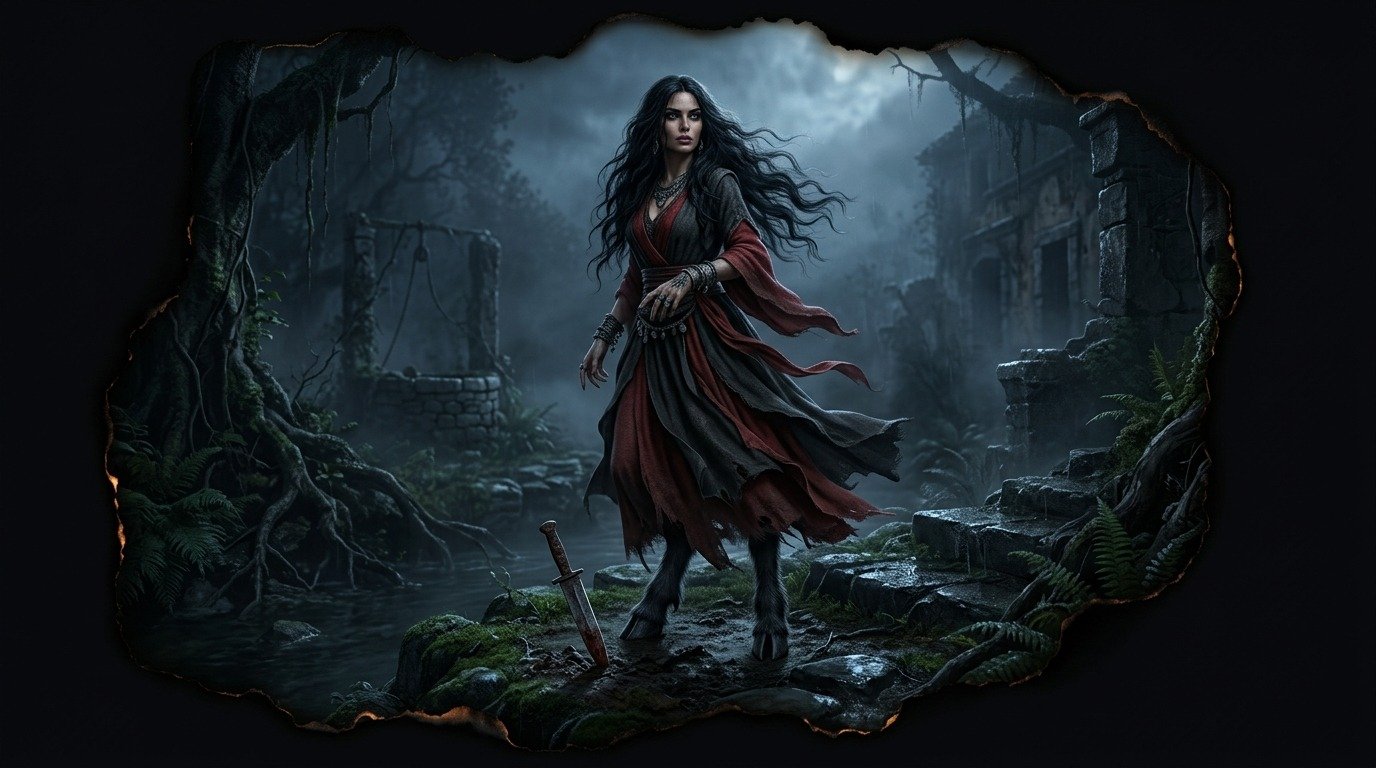
Aicha Kandicha: The Lady of the Cloven Hooves and Shadowy Lust
Origin and Legend
Within the vast corpus of Moroccan popular demonology, no figure evokes as much dread and fascination as Lalla Aicha Kandicha (also transliterated as Aisha Qandisha). This entity, commonly classified in Maghrebi culture as a *jinnia* (a female spirit of pre-Islamic nature), inhabits the damp and liminal borders of reality: riverbanks, ancient wells, freshwater springs, and ruins covered in wet undergrowth.
The genesis of Aicha Kandicha is divided into two parallel currents: sacred/anthropological myth and the historical memory of colonial resistance. From the perspective of historical anthropology, researchers such as Edward Westermarck suggest that Kandicha is a syncretic transposition of Astarte, the Phoenician goddess of fertility, carnal love, and war. The transition from the ancient Semitic cult to Berber mythology transformed the pagan deity into a nocturnal demonic entity, retaining her dual nature of irresistible erotic attraction and destructive lethality.
On the other hand, Moroccan oral tradition insists on a historical version set in the 16th century, during the period of the Portuguese occupation of coastal cities such as Safi or Mazagan (El Jadida). According to this account, Aicha was a noblewoman of the resistance (or a peasant woman of extraordinary beauty) whose family was massacred by Portuguese soldiers. Consumed by a desire for vengeance, Aicha began to use her dazzling appearance to seduce the invading officers and soldiers at night, luring them into the forests or swamps where, once isolated, she slit their throats with the help of local warriors or by her own hands. The terrified Portuguese began to call her "Aisha la Condesa" (Aisha the Countess, from which the term *Kandicha* would derive), gradually transforming the flesh-and-blood heroine into a spectral myth after her death.
Attributes and Manifestation
The manifestation of Aicha Kandicha follows a rigid pattern of seduction and horror. She presents herself to solitary men traveling at night, adopting the appearance of a woman of superhuman beauty, with long black hair and flowing garments, usually red or white. However, her true anatomical nature is revealed in her lower extremities: instead of human feet, she possesses the hooves of a goat, camel, or donkey.
An encounter with Aicha Kandicha is devastating to the male psyche. Those who yield to her erotic call and fail to detect her physical anomaly in time are driven to madness, paralysis of the will, or death by starvation and mystical ecstasy. To repel her or break her spell of submission, folkloric grimoires and popular beliefs dictate that one must drive an iron or steel knife into the damp earth, since, like all *djinn*, iron is her greatest anathema and neutralizes her illusory magic.
The Cult of Possession and Mitigation
Far from being a simple creature used to scare children, Aicha Kandicha is a central entity in the possession rites of heterodox Moroccan Sufism, specifically within the mystical brotherhoods of the *Hamadsha* and the *Gnawa*. In these syncretic cults, Kandicha is not exorcised in the Western sense, but rather appeased and domesticated through musical trance rituals (*Lila* or *Hadra*).
Adepts who have been possessed by her (often manifesting muteness, bodily paralysis, or severe melancholy) enter into communion with her energy through the hypnotic rhythm of drums, lutes (*guembri*), and flutes (*ghaita*). She is offered specific perfumes, the blood of animal sacrifices (commonly black roosters or goats), and her ritual colors are used: bright red and ash black. In exchange for this devotion and ritual submission, Kandicha transmutes her destructive wrath into a spiritual patronage that grants her human "husbands" gifts of clairvoyance, healing, and protection against spell work.
Symbolic and Esoteric Analysis
From the perspective of Carl Jung's depth psychology, Aicha Kandicha represents the archetype of the *Anima* in its most regressive, chthonic, and devouring aspect. She is the projection of the male shadow that fears the absolute power of wild femininity, untamed by patriarchal structures or monotheistic norms. Her indissoluble association with water (the unconscious) and beast hooves denotes the irresolvable tension between human civilization and the basic animal impulses of libido and death (*Eros* and *Thanatos*). In Maghrebi Islamic esotericism, she is a reminder of the fragility of *Aql* (human reason) in the face of the illusory and chaotic power of *Nafs* (the animal soul/instinctive ego).
Comments
Share information, an experience, or a source to help enrich this entry. They are automatically reviewed before being published.
Loading comments...