Ahuizotl
Ahuizotl: The Water Dog and the Executioner of the Open Eyes
Mexica Origin and Historiography
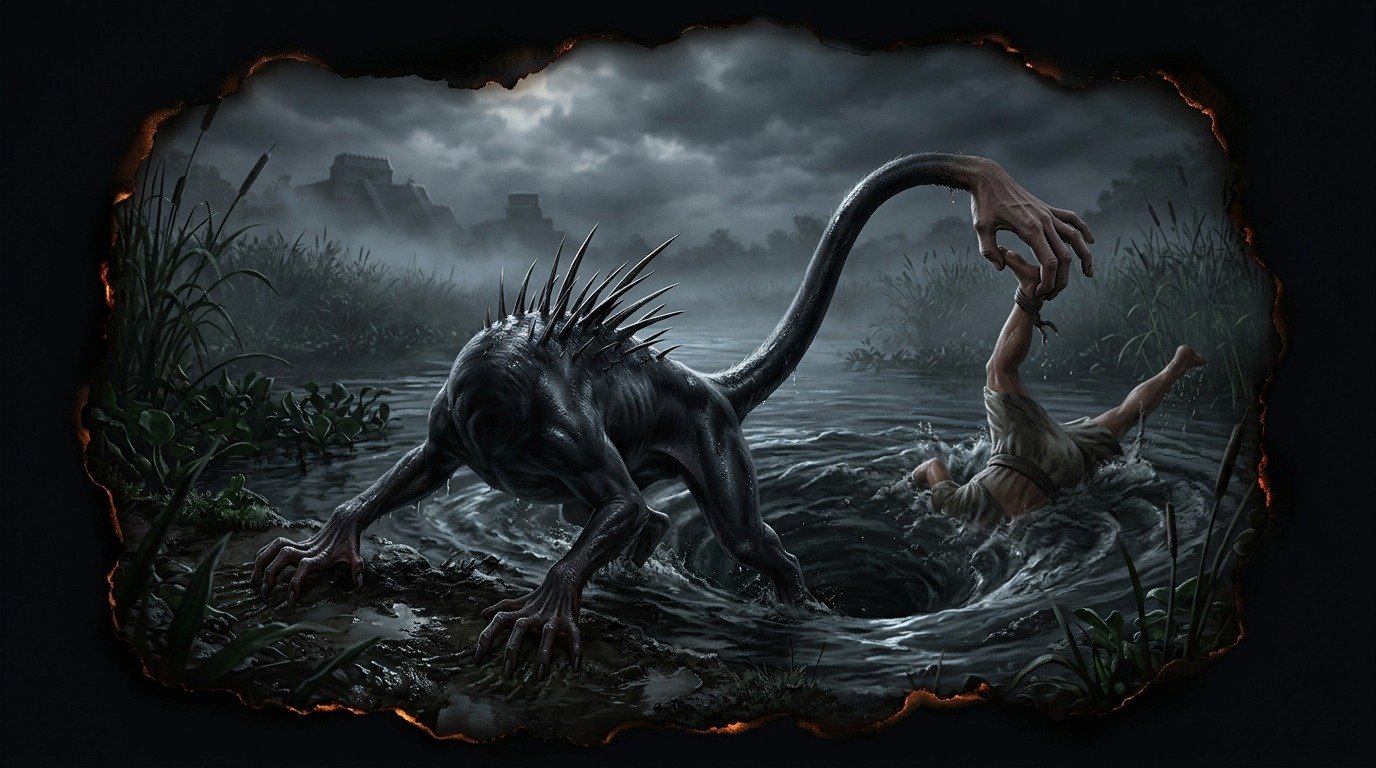
The Ahuizotl (from the Nahuatl *āhui-zōtl*: *atl*, water, and *itzcuintli*, dog; literally "water dog" or "thorny one of the water") is one of the most feared cryptozoological and sacred entities of pre-Hispanic Mexico. The most rigorous documentary record of this creature is found in Book XI of the *Florentine Codex*, compiled by the Franciscan friar Bernardino de Sahagún in the 16th century, where Nahua informants described in detail its physiognomy and predatory behavior in the lakes of the Valley of Mexico, particularly in the Texcoco basin. La physical description of the Ahuizotl is singularly grotesque: it is the size of a small dog or a coyote, but with extremely smooth, black, and slippery skin that, upon leaving the water, bristles into rigid spines. Its paws are similar to those of a monkey, endowed with extraordinary prehensile dexterity. The most disturbing feature of its anatomy is its long tail, which culminates in a perfectly functional human hand, with which it seizes its victims from the depths of the mud.
The Hunting Method and Ritual Necrophagy
The Ahuizotl does not hunt out of mere biological necessity, but operates under a logic that the ancient Mexica considered to be of a sacred and selective nature. Its primary habitat is the whirlpools and deep caverns that connected the lake bed with the aquatic underworld. To lure humans to the shore, the Ahuizotl imitated the desperate crying of a nursing infant or the sobbing of a woman in distress. When an unwary traveler approached to help the supposed victim, the hand at the end of the creature's tail would emerge swiftly, seize the individual's ankle, and drag them into the whirlpool. Three days later, the body of the drowned person was returned to the surface. The creature consumed only very specific parts of the body: the eyes, the teeth, and the fingernails. The rest of the corpse was found intact, yet deprived of these parts, which represented the hardest and most luminous elements of the human organism.
Theology of Death by Water: The Fate of the Drowned
In the Mexica worldview, the attack of an Ahuizotl was not seen as a profane tragedy, but as a theophany, a divine choice. Pre-Hispanic priests taught that the victims of this creature had been personally selected by Tlaloc, the god of rain, and his consort Chalchiuhtlicue, deity of horizontal waters. The body of the victim was treated with immense ceremonial respect. No common mortal could touch the corpse, under penalty of suffering the same fate or falling into spiritual disgrace. Only priests dedicated to the cult of Tlaloc were authorized to recover the body from the water and transport it on ritual litters. The deceased was not cremated like other dead, but buried with great honors in a sacred enclosure called *Ayauhcalco* (the house of the mist). Their soul did not descend to the gloomy Mictlan, but ascended directly to *Tlalocan*, the green paradise of eternal abundance, perpetual spring, and inexhaustible water.
Political and Esoteric Symbolism
The name of this creature transcended the mythical realm to become a symbol of absolute political power. The eighth *tlatoani* (emperor) of Tenochtitlan, Ahuitzotl (who ruled between 1486 and 1502), adopted the name and glyph of the lake monster to represent his own warlike and expansionist character. Just as the Ahuizotl mercilessly dragged its prey to the bottom of the water, the emperor Ahuitzotl dragged enemy nations to tribute and sacrifice. Esoterically, the Ahuizotl represents the voracity of the water element in its destructive and purifying aspect. It is the "hidden hand" of nature reclaiming its tribute of flesh and light (the eyes and nails, associated with the spirit and defense in Nahua mystical anatomy), reminding men that the water resources that sustain life inevitably demand a payment of blood and submission.
Comments
Share information, an experience, or a source to help enrich this entry. They are automatically reviewed before being published.
Loading comments...