Tsukuyomi
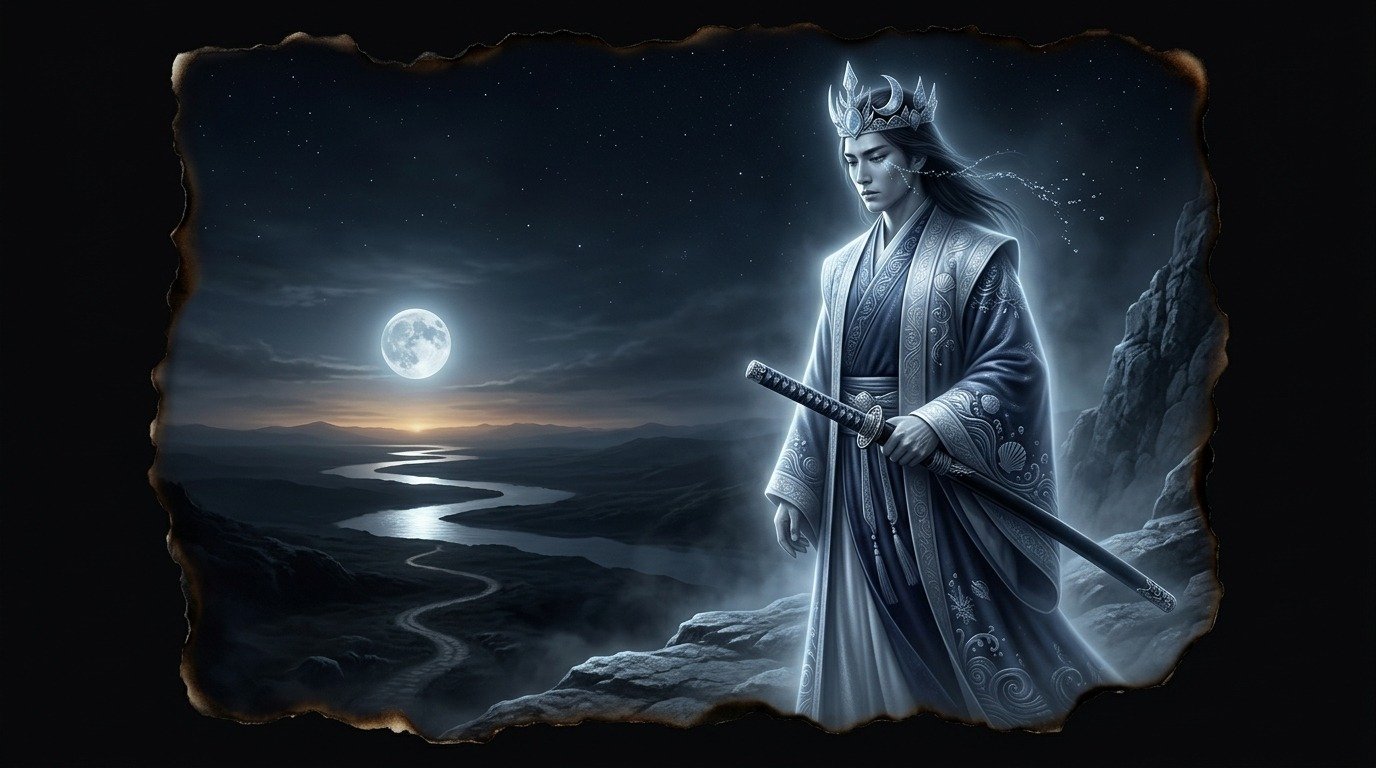
Tsukuyomi: the lord of the silver night and eternal silence
The reflection in the sacred water
From the right eye of Izanagi, while the water of the sacred river washed away the last vestiges of death, Tsukuyomi was born, the god of the moon and the realm of night. Unlike the radiant energy of Amaterasu and the violent passion of Susanoo, Tsukuyomi emerged wrapped in an aura of silver, stillness, and melancholy. He is the guardian of silent time, the lord of the tides that rise and fall under the influence of his cold gaze, and the protector of travelers who cross dark paths under his pale guidance.
Tsukuyomi dwells in a palace built of seashells and ice crystals in the night sky. His beauty is serene yet distant; his presence does not warm the skin like that of his sister, but rather invites introspection, sleep, and the revelation of secrets hidden during the day. For a long time, he and Amaterasu shared the same sky, ruling the firmament together in a dance of sunlight and silver flashes that maintained the balance of time.
The dinner of discord
Tsukuyomi's fate changed forever during a celestial banquet. Amaterasu, busy with her duties at the divine loom, asked her brother to represent her at a festival on earth, organized by Ukemochi, the goddess of food. Tsukuyomi descended from the heavens and was received by the earthly deity, who wished to offer him a feast worthy of his lineage. However, the method Ukemochi used to prepare the food horrified the refined senses of the moon god.
Ukemochi looked toward the sea and spat fish from her mouth; then she looked toward the forests and game animals burst from her body; finally, she looked toward the cultivated fields and from her nose and anus emerged grains of cooked rice and delicious delicacies. Although the food was pure and delicious, Tsukuyomi considered the way it had been created to be an unacceptable impurity, an unforgivable insult to his celestial dignity. Filled with cold contempt, he drew his sword and, without hesitation, put the goddess of food to death in the middle of her own banquet.
The banishment to the twilight
When Tsukuyomi returned to heaven and related what had happened to Amaterasu, expecting to receive praise for having defended the honor of the gods against impurity, he was met with an anger he did not expect. Amaterasu, horrified by her brother's unnecessary cruelty and by the death of a deity who only sought to be hospitable (and from whose lifeless body, ironically, sprouted the seeds of rice, millet, and wheat for mankind), refused to ever look upon Tsukuyomi's face again.
The sun goddess declared that she would never share the same space with him again. From that day on, the siblings took separate paths across the great celestial vault. When Amaterasu rises in the east, Tsukuyomi quickly hides in the west, condemned to reign only in the twilight, surrounded by the twinkling of the stars that serve as his solitary court. His light, though beautiful, is the testimony of an eternal exile, a silver beacon that reminds mortals of the price of sovereignty and the insurmountable distance between day and night.
Comments
Share information, an experience, or a source to help enrich this entry. They are automatically reviewed before being published.
Loading comments...