La Fiura
La Fiura: The Haughty Deformity and the Venom of the Forest
Genesis and Anatomy of the Feminine Shadow
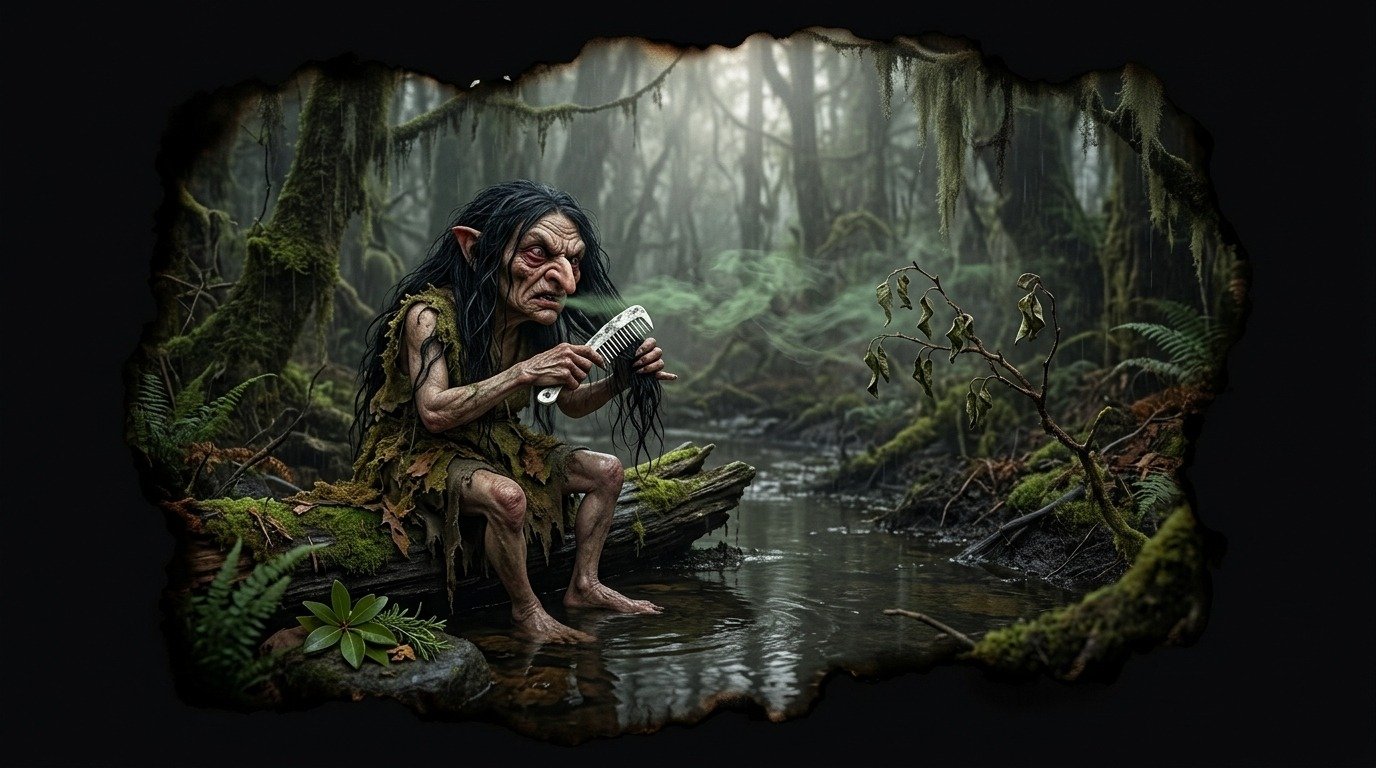
La Fiura is the female counterpart of the Trauco, identified in the Chilote worldview as his wife or his equal in the hierarchy of forest spirits. She represents the quintessence of perversity, physical ugliness, and gratuitous malevolence. Physically, she is described as a tiny creature, about forty to fifty centimeters (16 to 20 inches) tall, with hyperbolically grotesque features, a hooked nose, bloodshot eyes, and dislocated limbs that lack normal joints. Her hair, long, black, and tangled like *alerce* roots, contrasts with her strange fixation on cleanliness and coquetry. She dresses in moss and dry leaves, and usually inhabits the swamps, bogs, and gloomy wetlands of the Chilote forest, places where the air is thick and organic decomposition is constant.
The Breath of La Fiura and Crippling
Unlike her male counterpart, whose primary motive is procreation and lust, La Fiura acts out of an absolute contempt for human beauty and health, especially that of young people of both sexes. She is often found sitting on a rotting log by the edge of a stream, combing her hair with a comb of silver or polished bone. If a human surprises her or mocks her appearance, La Fiura unleashes her wrath through her "breath" (*La Fiura's mischief*). This poisoned breath travels through the air and has the power to deform bodies: it produces facial paralysis, irreversible twisting of limbs (*crippling*), and severe mental disorders. Her influence is so destructive that even domestic animals that cross her path are left crippled or die of wasting disease. Local healers (*machis* or bone-setters) claim that the only remedy against the illness of La Fiura is a rigorous treatment with infusions of sacred plants such as *canelo*, scrapings of magical stones, and massages with marine animal fat, applied under strict purification rituals.
Symbology of Rot and Vanity
La Fiura embodies the archetype of the shadow of feminine vanity and physical decay. She is the projection of the fear of deformity, old age, and sudden illness in isolated communities, where strokes, polio, or severe rheumatism—caused by the relentless climate of the south—lacked accessible medical explanations. On the esoteric plane, she represents the corruption of formal beauty; a reminder that beneath the surface of creative nature there also beats a destructive, sterile, and venomous force that rejects the harmony of the human world and seeks to drag it into the chaos of decaying matter.
Comments
Share information, an experience, or a source to help enrich this entry. They are automatically reviewed before being published.
Loading comments...