Watseka Case
Watseka Case: The Transmigration of the Illinois Wonder
The Fundamental Fact
This is the first documented case of benevolent possession in the history of Western psychic research. Unlike traditional demonic possessions, this event consisted of the peaceful replacement of a young girl's consciousness by the spirit of a deceased neighbor. The process did not seek the destruction of the person, but rather the physical healing of the patient and the manifestation of the survival of the soul after death.
Protagonists and Setting
The events occurred in the town of Watseka, Illinois, United States, between July 1877 and May 1878. The main protagonist was Lurancy Vennum, a fourteen-year-old adolescent from a working-class family that was skeptical of spiritualism. The other central figure was Mary Roff, a young woman from a wealthy family in the same town who had died in 1865, at eighteen years of age, after suffering from severe nervous disorders and seizures throughout her life. Lurancy was only one year old when Mary died, so they never got to know each other in life.
The Transformation and the Exchange
In July 1877, Lurancy Vennum began to suffer from fits of physical rigidity, followed by deep trances where she claimed to travel to the spiritual plane and converse with deceased people. Her physical and mental health worsened drastically. Local doctors declared her insane and recommended her commitment to the Illinois State Insane Asylum.
In January 1878, Asa Roff, father of the deceased Mary and a devout spiritualist, visited the Vennum family. He proposed avoiding the asylum and allowing a gentle spirit to take control of the young girl's body to guide her in her healing process. During a seance held on February 1, 1878, in the presence of a doctor, Lurancy declared that her own soul was very weak and needed to withdraw to the spiritual plane to heal. She reported that the spirit of Mary Roff was ready to take her place.
That same day, the personality change was completed. Upon waking, the young girl did not recognize Lurancy's parents and siblings, claiming that her name was Mary Roff and that she wished to return to her real home. At the young girl's insistence, she was moved to live with the Roff family.
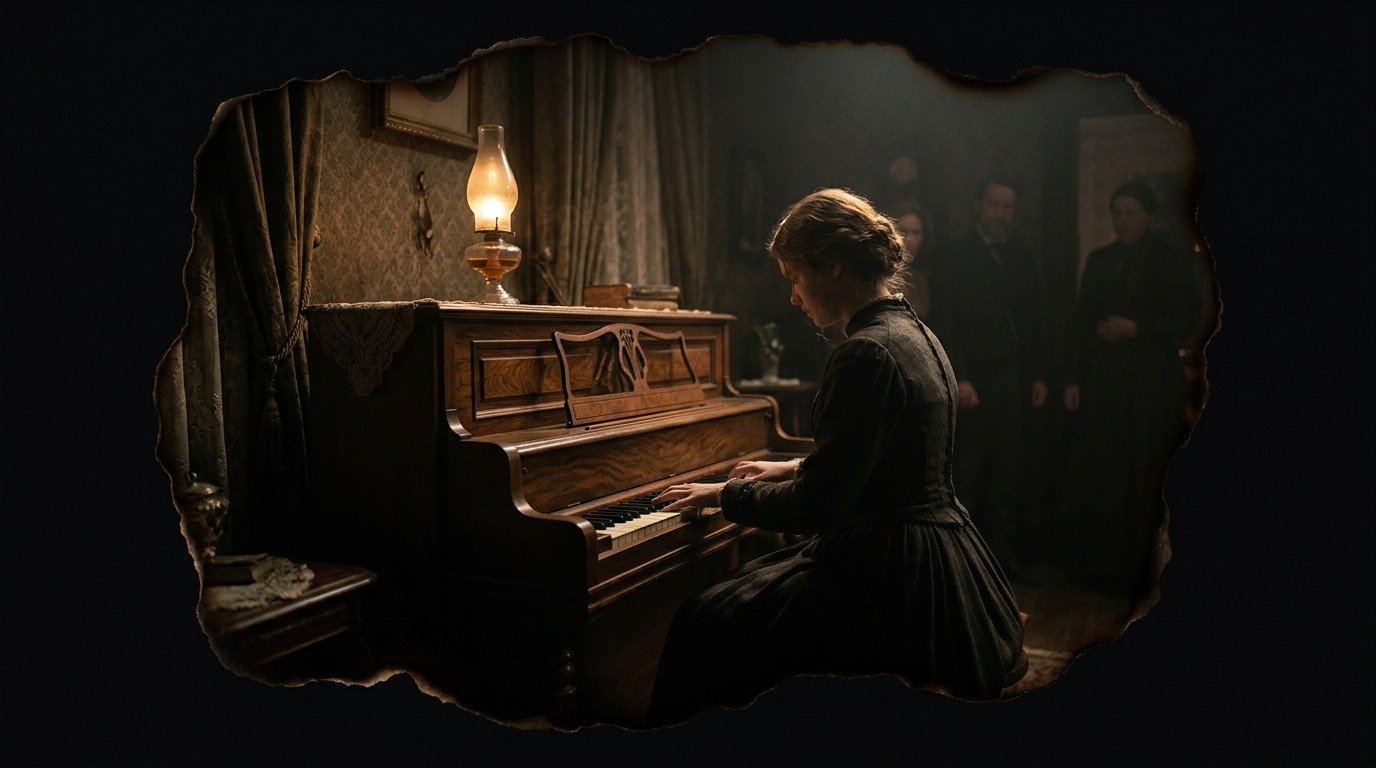
At the Roffs' house, the young girl's behavior surprised the community. She immediately recognized every one of Mary's personal belongings, recalled childhood anecdotes, and recognized neighbors and family friends by name on the street, pointing out details that only Mary Roff could have known. Furthermore, she demonstrated that she knew how to play the piano and chose the deceased young woman's favorite pieces, even though Lurancy Vennum had never taken music lessons nor owned a piano in her home. During the four months that this possession lasted, the adolescent's health was completely restored and her fits ceased.
On May 21, 1878, the spirit of Mary Roff announced that Lurancy's soul was now healed and ready to retake her body. After saying goodbye to the Roff family, the transition took place. Lurancy Vennum regained her original consciousness, returned to her biological parents, and maintained her restored health. She later married and led a normal life, retaining the exact memory of the period of her possession.
Scrutiny and Science
The case was rigorously investigated and documented by Dr. Richard Stevens, a local physician and student of psychic phenomena, who published his observations in 1878 in the book *The Watseka Wonder* (The Watseka Wonder). Subsequently, the case was analyzed by the Society for Psychical Research (SPR) of London and by William James, the father of American psychology, who cited it in his studies on consciousness and multiple identity.
The explanation of the psychology and psychiatry of the era defines the case as a dissociative identity disorder aggravated by collective hysteria and a strong suggestion from the family environment. According to this theory, Lurancy unconsciously constructed an alternative personality based on the figure of Mary Roff, a young woman whose tragic death was widely discussed in the small community of Watseka, passively absorbing information throughout her childhood.
Significance and Connections
The Watseka case is the classic example of the phenomenon known in modern esotericism as a *walk-in* (soul union or soul transfer within the same physical body). It differs from hostile possession and the poltergeist because the spirit acted as a therapeutic and harmonious element. The story has inspired psychic research books, plays, and the feature-length documentary *The Watseka Wonder* in 2009. Within the spiritualist tradition, it is considered one of the strongest pieces of documentary evidence regarding the survival of consciousness after the death of the physical body.
Comments
Share information, an experience, or a source to help enrich this entry. They are automatically reviewed before being published.
Loading comments...