Zadkiel
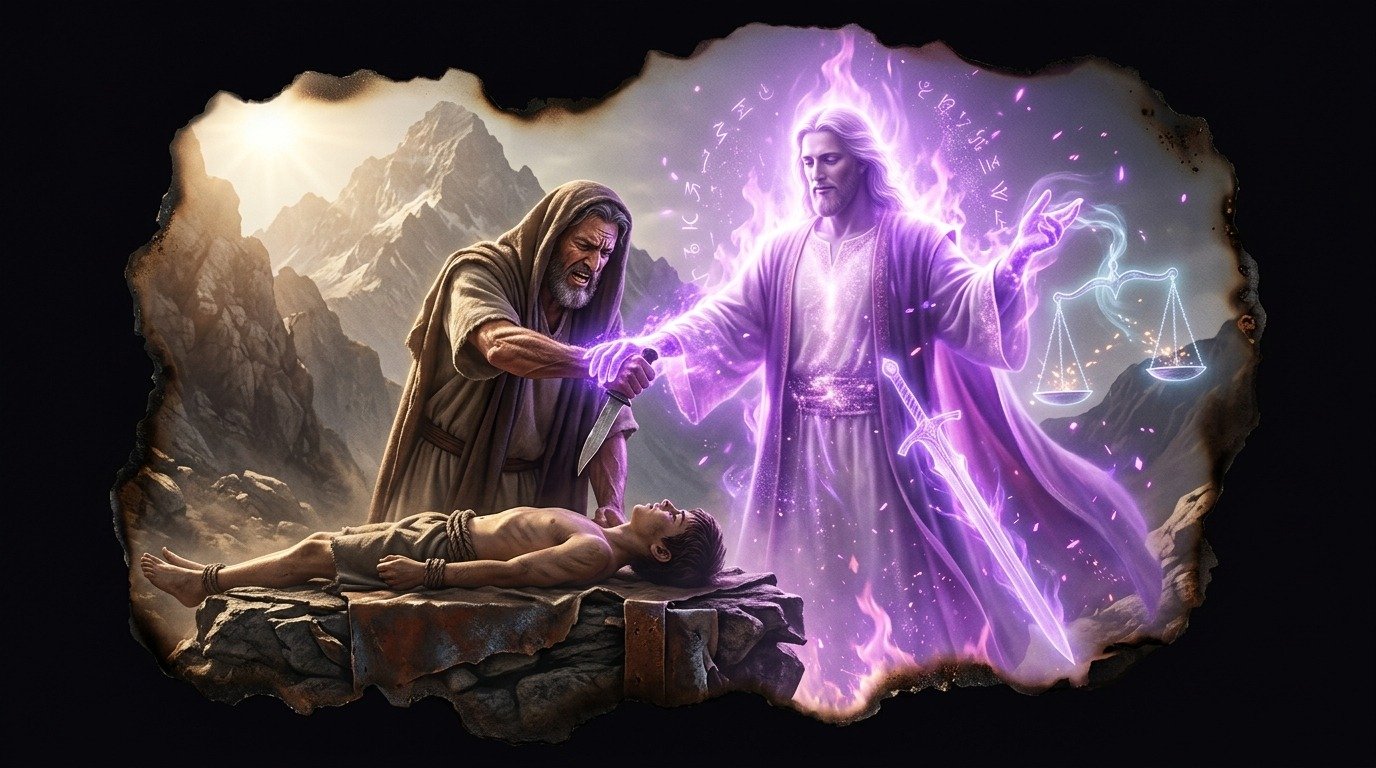
Zadkiel: The Mercy That Halts the Blade
The Blade Suspended in Midair
There is a moment in the history of the human spirit that defines the authority of Zadkiel: the moment when a father, cornered by obedience, raises a knife over the body of his own son on the summit of a desolate mountain. The mountain air is thick with dust, the metal gleams under an unforgiving sun, and the destiny of the human lineage hangs by a thread of steel. In that precise second, just as the arm begins to descend, time freezes. It is not brute force that stops the sacrifice, but a hand of violet light and a voice that resonates with the softness of a fresh water spring.
Zadkiel is the archangel who intervenes when the law of rigor threatens to consume life. His authority is not based on the imposition of force, but on the ability to introduce clemency where judgment seems absolute. He is the embodiment of divine benevolence, the reminder that justice without mercy is nothing but sacred cruelty.
The Alchemist of Forgiveness
In the order of the celestial spheres, Zadkiel governs the current of pure benevolence. His presence is recognized by a violet glow, a fire that does not burn, but transmutes. When a person drags the dead weight of guilt, resentment, or past mistakes, Zadkiel acts as a spiritual alchemist. He does not erase the actions of man with cheap indulgence; instead, he offers the gift of sacred memory, allowing the soul to remember its divine origin and free itself from the chains of its own making.
He is also the custodian of sacred names and the instructor of the strayed. When spirits lose themselves in the labyrinth of earthly amnesia, forgetting who they are and where they come from, Zadkiel presents himself not as a harsh judge, but as the herald of mercy who restores the memory of their celestial lineage.
The Weight of Judgment Softened
Faced with the hosts of rigor who demand the payment of every cosmic debt with pain and punishment, Zadkiel stands as the defender of the accused. He presents the scales of human intentions before the court of the Throne, rescuing even the slightest glimmer of goodwill in the midst of a life of darkness. His sword is not made to wound, but to cut the invisible ropes with which man binds himself to his own abysses.
Comments
Share information, an experience, or a source to help enrich this entry. They are automatically reviewed before being published.
Loading comments...